




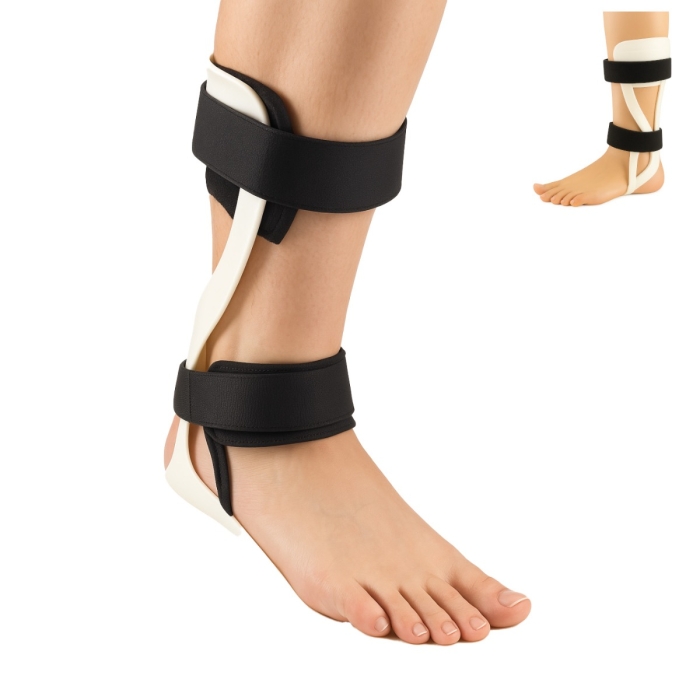
Bodytonix Full AFO for Foot Drop and Hemiplegia
Full AFO for Foot Drop provides static dorsiflexion assistance and lateral stability for the whole foot and ankle, protecting, supporting and preventing further deformity or damage to the ankle and foot.
Used for foot drop weakness or paralysis of the muscles involved in lifting the front part of the foot, caused by nerve injuries such as hemiplegia, paralysis, CVA/stroke, etc.
Provides immobilisation of the limb where a 90-degree angle is needed.
CE Mark, Class I medical device.
Sold: Each
Incl. VAT Exl. VAT
Product Description
Foot Ankle Orthosis is Designed to Provide Static Dorsiflexion Assistance
This full foot ankle foot orthosis is designed to provide static dorsiflexion assistance and lateral stability for the whole foot and ankle. It is intended to support walking, improve foot positioning and help reduce the risk of further deformity or damage where weakness or poor control affects gait.
Its full-foot design makes it a practical option where more structured support is needed than a minimal foot drop brace can provide. It is suitable for clinical fitting, rehabilitation use and ongoing day-to-day support where stability, positioning and shoe fit are key considerations.
Key selling points
- Provides static dorsiflexion assistance to help improve toe clearance during walking.
- Supports the whole foot and ankle for more structured control and lateral stability.
- Anatomically shaped plastic shell helps hold the ankle closer to a functional position.
- Foam and cotton-contact lining is designed for comfort against the skin.
- Hook and loop fasteners allow straightforward fitting and adjustment.
- Trimmable insole helps improve shoe fit where minor adjustment is needed.
- Suitable for a range of neurological and orthopaedic presentations that benefit from a 90 degree ankle position.
What it does and how it works
This AFO for drop foot supports the ankle and foot in a more controlled position, helping reduce the tendency for the forefoot to drop during swing phase. By assisting dorsiflexion and improving alignment, it can help make walking safer, smoother and more efficient for people with reduced muscle function or poor ankle control.
The full-foot shell also adds lateral stability around the ankle and rearfoot. This can be useful where there is instability, weakness or a need to protect the lower limb from further strain during standing and walking.
Common problems it may help with
Foot drop
Helps lift and support the front of the foot where weakness or paralysis affects toe clearance. This can reduce the tendency to catch the toes and may improve walking confidence.
Hemiplegia and stroke-related weakness
Provides structured positioning where neurological weakness affects ankle control. It may help improve stability during rehabilitation and daily mobility.
Ankle instability
The more encompassing design can help steady the ankle where extra side-to-side support is needed. This is useful when a lighter support is not enough.
Posterior tibial tendon dysfunction or ankle fusion
Can help where a more fixed ankle position is required for support and protection. It may also be useful where motion control is part of the management plan.
Applications and suitability
This orthosis is intended for people who need support for foot drop weakness or paralysis, including presentations linked to hemiplegia, paralysis or CVA or stroke. It is also indicated where immobilisation of the limb in a 90 degree ankle angle is needed, and where ankle instability, posterior tibial tendon dysfunction, ankle fusion or arthritis require a more supportive brace.
It may suit clinicians, rehabilitation teams, orthotic providers and informed users looking for a prefabricated AFO with more full-foot control. It is particularly relevant where shoe-compatible support and adjustable fastening are both important to successful wear.
Who it may not suit
This product may not be the best choice where only very light swing assist is needed, where a more dynamic carbon design is preferred, or where the user cannot tolerate a full-foot shell inside footwear. It may also be unsuitable where swelling, skin vulnerability, severe deformity or footwear limitations make a standard prefabricated AFO difficult to fit safely.
Users with complex neurological presentations, changing limb volume, severe spasticity, open wounds or uncertain diagnosis should be assessed by a qualified healthcare professional before use. A brace that is too tight, poorly fitted or worn in the wrong shoe can reduce comfort and performance.
AFO for Foot Drop

Product specifications
| Product type | Full foot ankle foot orthosis |
|---|---|
| Primary function | Static dorsiflexion assistance and lateral ankle-foot stability |
| Material format | Anatomically manufactured plastic shell with high-density foam and cotton-contact lining |
| Fastening | Adjustable hook and loop fasteners |
| Adjustment | Insole can be trimmed for shoe fit; plastic may be modified with a heat gun |
| Size guide | Small 34-37cm, Medium 38-41cm, Large 42-45cm lower leg height |
| Measurement method | Measure from heel base to just below the fibular head, using bony landmarks |
| Supply format | Sold individually |
| Device classification | CE Mark, Class I medical device |
Usage instructions
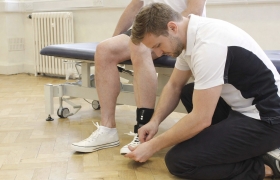
- Open the hook and loop fasteners fully before positioning the orthosis.
- Place the foot into the brace and wrap the fasteners around the ankle and leg securely.
- Check that the brace holds the ankle comfortably and that circulation is not restricted.
- Trim the insole if needed to improve exact shoe fit.
- Where clinically appropriate, the plastic can be modified with a heat gun for adjustment.
- Always pair the brace with suitable footwear and review fit regularly, especially during early use.
Benefits
Improves walking support
By helping maintain foot position during gait, this AFO can support safer toe clearance and more confident walking.
Adds whole-foot control
The full-foot format offers more structured support than minimal braces, making it useful where extra control is needed.
Comfort-focused lining
The foam and cotton-contact layer is designed to improve comfort during wear, which can help with day-to-day tolerance.
Simple fitting and adjustment
Hook and loop fastening and trimmable shoe fit features make the brace easier to apply and adapt in practical use.
Contraindications & warnings
- Use only where an AFO is appropriate for the user’s condition and gait needs.
- Check skin regularly, especially during initial wear, to monitor for pressure points, rubbing or irritation.
- Do not over-tighten the fasteners, as circulation should not be restricted.
- Seek clinical advice if pain, numbness, increasing swelling or reduced tolerance develops.
- Footwear compatibility is important, as poor shoe fit can affect comfort, stability and function.
- Any modification of the plastic should be carried out appropriately and only where suitable for the user and setting.
FAQs
What is this full-foot AFO used for?
This brace is used to support the foot and ankle where foot drop, weakness or poor control affect walking. It is also used where a more fixed ankle position is needed for stability, protection or rehabilitation. It can be helpful in neurological and orthopaedic cases where structured support is preferred.
How does it help with foot drop?
The orthosis assists dorsiflexion by holding the foot in a more functional position. This can help reduce toe drag during swing phase and improve overall gait safety. It also gives added ankle stability compared with lighter foot drop aids.
Who might benefit from this type of brace?
People with foot drop linked to stroke, hemiplegia, paralysis or nerve-related weakness may benefit from this design. It may also suit users with ankle instability, ankle fusion or posterior tibial tendon dysfunction where structured support is required. Choice should still be based on individual assessment, fit and footwear.
Can the brace be adjusted to fit inside shoes?
Yes, the insole can be trimmed to improve exact shoe fit. The product information also states that the plastic may be modified with a heat gun where adjustment is needed. Footwear should still provide enough space and stability for safe use.
How do I choose the right size?
Size selection is based on lower leg height rather than shoe size alone. The measurement is taken from the heel base to just below the fibular head, using bony landmarks for consistency. The listed sizes are Small 34-37cm, Medium 38-41cm and Large 42-45cm.
Is this brace suitable for daily wear?
It can be suitable for regular wear where the fit is correct and the user tolerates the brace well. Daily use depends on comfort, skin condition, activity level and footwear compatibility. For longer wear periods, regular skin and fit checks are important.
When might this brace not be the best option?
It may not be ideal for someone who only needs very light assistance or who cannot accommodate a full-foot shell inside their shoes. It may also be less suitable for complex deformity, major swelling changes or very fragile skin. In those cases, a different AFO style or a more customised solution may be more appropriate.
Do I need professional guidance before using an AFO?
Many users benefit from professional guidance, especially when the problem is neurological, long standing or linked to gait instability. A clinician can help confirm the right brace style, size and footwear choice. This is particularly important if symptoms are changing or if there is a risk of falls or pressure problems.
Related Links
Product Summary
This full foot AFO is a prefabricated ankle foot orthosis for foot drop, hemiplegia and other conditions that need structured foot and ankle support. It provides static dorsiflexion assistance, lateral stability, adjustable fastening and a trimmable insole, making it a practical choice where safer gait, better positioning and dependable day-to-day support are the main goals.
Sold: Each
Incl. VAT Exl. VAT


Sold: Each
Incl. VAT Exl. VAT