



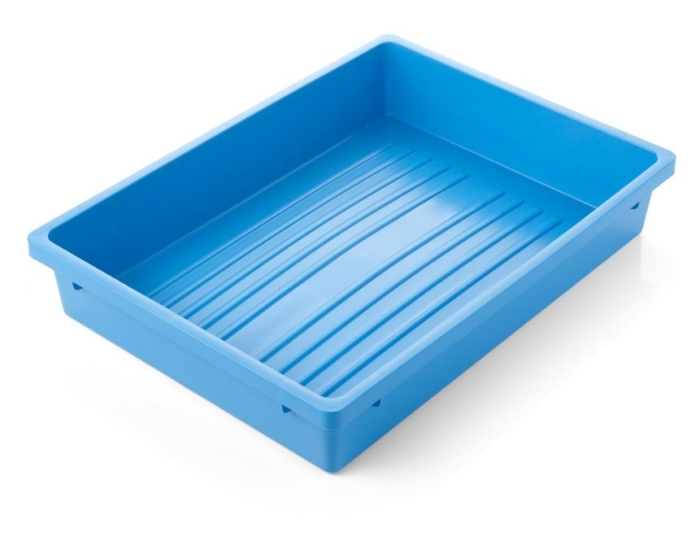
Blue Autoclavable Podiatry Instrument Tray - Autoclave Friendly
Long Life Re-usable Polypropylene Instrument Tray for use in Sterile Services, Decontamination Units, Hospitals and Clinics.
Can be sterilised by Autoclave, Ethylene Oxide or Hydrogen Plasma.
Smooth edges and surfaces eliminate paper rips during packing and sterilisation.
Manufactured from high-quality polypropylene.
Autoclavable up to 135°C.

Product Description
Reusable Sterilisable Instrument Tray
A durable, lightweight polypropylene tray designed to support safe handling, cleaning, and sterilisation of podiatry and clinical instruments.
Best for: Sterile services departments, podiatry clinics, hospitals, and decontamination units managing reusable instrument sets.
Not ideal for: Situations requiring deep lidded containment or transport of liquid materials.
- Durable medical-grade polypropylene construction
- Ribbed base design for improved cleaning performance
- Compatible with multiple sterilisation methods
What is it?
The Blue Autoclavable Podiatry Instrument Tray is a reusable clinical tray designed to support the cleaning, organisation, and sterilisation of podiatry and medical instruments. Manufactured from strong polypropylene, it offers a lightweight alternative to traditional stainless steel trays while maintaining durability suitable for repeated use in professional healthcare environments.
Instrument trays play a key role in infection control processes. They allow instruments to be safely contained during transportation, washing, sterilisation, and storage. This tray is designed to support those workflows in sterile services departments, podiatry clinics, surgical units, and other healthcare environments where reusable instruments are routinely processed.
The tray features a solid ribbed base that slightly elevates instruments from the tray surface. This design allows cleaning fluids and sterilising agents to circulate more effectively around the instruments during washing and sterilisation cycles.
Its smooth edges and surfaces are designed to reduce the risk of tearing sterilisation wraps or packaging materials during tray preparation and packing. The result is a practical, reliable tray that integrates easily into standard instrument processing routines.
Who is it for?
This tray is intended for healthcare environments that routinely process reusable instruments. It is commonly used in podiatry clinics, hospital departments, and sterile processing facilities.
Typical users include:
- Podiatrists managing instrument sets between patient appointments
- Sterile services technicians preparing instruments for sterilisation
- Clinical assistants responsible for instrument decontamination
- Hospital departments requiring lightweight, reusable instrument containment
- Healthcare practices seeking alternatives to stainless steel trays
The tray is particularly useful in environments where frequent sterilisation cycles are required. Its lightweight construction makes handling easier during busy clinical workflows while still providing a strong, reliable platform for instrument sets.
What does it help with?
Instrument trays support safe and efficient instrument processing in clinical environments. This tray is designed to improve handling, cleaning performance, and sterilisation compatibility.
- Instrument organisation → Keeps clinical tools grouped and contained during cleaning and sterilisation cycles
- Cleaning efficiency → Ribbed base elevates instruments, allowing improved fluid circulation
- Reduced handling risk → Instruments can be transported together rather than individually
- Improved sterilisation workflow → Compatible with multiple sterilisation methods used in healthcare facilities
- Packaging protection → Smooth edges help prevent tearing of sterilisation wraps
- Weight reduction → Significantly lighter than stainless steel trays for easier handling
By supporting these processes, the tray contributes to smoother instrument management within busy clinical settings.
How does it work?
The tray functions as a reusable platform for holding instruments during cleaning and sterilisation. Its design incorporates several features that support decontamination and sterile processing workflows.
The ribbed base lifts instruments slightly above the tray surface. This helps cleaning solutions and sterilising agents circulate around the instruments more effectively. When instruments sit directly against flat surfaces, cleaning fluids may not reach all areas efficiently. Elevation improves exposure and allows residue to be removed more easily.
The polypropylene material offers durability while remaining lighter than stainless steel. This reduces physical strain when trays are repeatedly handled during washing, packing, and sterilisation cycles.
The tray is compatible with several common sterilisation methods used in healthcare environments:
- Steam autoclave sterilisation
- Ethylene oxide sterilisation
- Hydrogen plasma sterilisation
This versatility allows the tray to integrate into a range of sterile processing systems.
Smooth edges and surfaces help protect sterilisation wraps during packaging. This reduces the risk of damage that could compromise sterile barriers.
Expected use
Although this product is not worn on the body, it is designed to provide consistent reliability across repeated sterilisation cycles.
First use: The tray can be introduced immediately into standard cleaning and sterilisation workflows after appropriate preparation.
Short-term use (days): Clinics typically integrate the tray into daily instrument processing routines, using it during washing, packing, and sterilisation.
Ongoing use (weeks and beyond): Polypropylene construction allows the tray to withstand repeated sterilisation cycles while maintaining structural integrity when used according to recommended sterilisation limits.
Regular inspection is recommended to ensure the tray remains in good condition.
Common instrument processing problems and solutions
| Common problem | How the product helps |
|---|---|
| Instruments lying flat during cleaning | Ribbed base elevates instruments to allow better cleaning fluid circulation |
| Heavy stainless steel trays | Polypropylene construction makes the tray significantly lighter |
| Difficulty organising instrument sets | Provides a dedicated container to group instruments together |
| Packaging tears during sterilisation | Smooth edges reduce the risk of damaging wraps |
| Compatibility with sterilisation systems | Supports autoclave, ethylene oxide, and hydrogen plasma sterilisation |
Key benefits
- Lightweight design compared with stainless steel alternatives
- Durable polypropylene suitable for repeated sterilisation cycles
- Ribbed base improves cleaning access around instruments
- Smooth surfaces help protect sterilisation packaging
- Compatible with several common sterilisation methods
- Suitable for clinical, hospital, and sterile processing environments
Fit & comfort check
For best results, instruments should sit comfortably within the tray without overcrowding.
- Ensure instruments are arranged so cleaning fluids can circulate
- Avoid stacking instruments tightly together
- Confirm tray dimensions suit the intended instrument sets
- Check compatibility with sterilisation equipment used in your facility
Correct loading helps maximise cleaning efficiency and reduces the risk of incomplete sterilisation.
Common mistakes to avoid
- Overloading the tray with too many instruments
- Stacking instruments in ways that block cleaning fluid access
- Exceeding recommended sterilisation temperatures
- Using trays that are damaged or heavily worn
How to use
- Place clean or used instruments into the tray, ensuring they are evenly spaced.
- Load the tray into the appropriate cleaning or washing system.
- After cleaning, prepare instruments for sterilisation while remaining in the tray.
- Wrap or package the tray according to facility protocols.
- Process through the chosen sterilisation method.
- Allow the tray and instruments to cool before handling or storage.
Technical specifications
| Product type | Reusable instrument tray |
|---|---|
| Material | Polypropylene |
| Colour | Blue |
| Dimensions | 424 mm × 305 mm × 75 mm |
| Sterilisation compatibility | Autoclave, Ethylene Oxide, Hydrogen Plasma |
| Maximum autoclave temperature | Up to 135°C |
| Design features | Solid ribbed base with smooth edges |
| Pack contents | Single tray |
Frequently asked questions
Is this tray suitable for autoclave sterilisation?
Yes. The tray is designed to withstand autoclave sterilisation up to 135°C when used according to standard sterilisation procedures.
Is it lighter than stainless steel trays?
Yes. Polypropylene construction makes the tray approximately 50% lighter than comparable stainless steel trays, making handling easier during busy clinical workflows.
Can it be used with different sterilisation systems?
The tray is compatible with several sterilisation methods including steam autoclave, ethylene oxide, and hydrogen plasma systems.
Does the ribbed base affect instrument stability?
The ribbed base is designed to gently elevate instruments while still providing stable support during processing.
Can it be used for podiatry instrument sets?
Yes. The tray is commonly used to organise and process podiatry instruments within clinical and hospital environments.
Does it require special cleaning?
Standard instrument washing and sterilisation procedures are typically suitable. Always follow local infection control protocols.
Complementary products
This tray may be used alongside other clinical processing and podiatry equipment, including:
- Instrument sterilisation wraps
- Podiatry instrument sets
- Autoclave pouches
- Instrument cleaning brushes
- Decontamination detergents
Combining appropriate cleaning, packaging, and sterilisation products helps support safe and consistent instrument processing workflows.
Written by: Algeos Product & Clinical Content Team
Last reviewed: March 2026
This content is provided for buyer guidance and product understanding. It is not intended as medical advice or clinical instruction.
Frequently bought together
Sold: Pack of 10
Incl. VAT Exl. VAT
Sold: Pack of 100
Incl. VAT Exl. VAT
Sold: Full Kit
Incl. VAT Exl. VAT
Sold: Each
Incl. VAT Exl. VAT
Sold: Each
Incl. VAT Exl. VAT
Sold: Each
Incl. VAT Exl. VAT
Sold: Each
Incl. VAT Exl. VAT
Sold: each
Incl. VAT Exl. VAT
Sold: Each
Incl. VAT Exl. VATSold: Each
Incl. VAT Exl. VAT
Sold: Each
Incl. VAT Exl. VATSold: Each
Incl. VAT Exl. VAT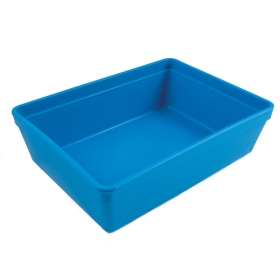
Sold: Each
Incl. VAT Exl. VAT
Sold: Each
Incl. VAT Exl. VAT
Sold: 424mm x 305mm x 75mm
Incl. VAT Exl. VAT