




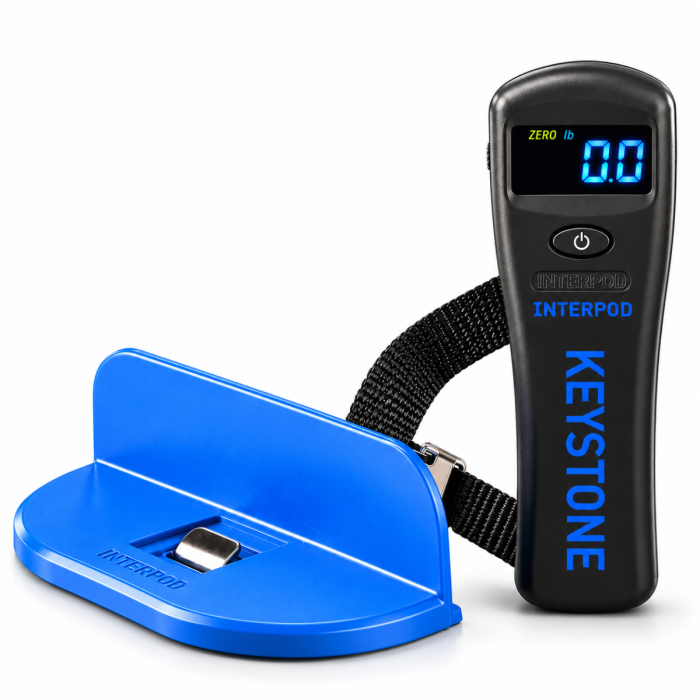
Interpod Keystone Supination Resistance Tool
The Interpod Keystone is a revolutionary tool for podiatrists, offering precise measurement and enhanced patient care.
Its durable construction, ease of use, and ability to facilitate professional collaboration make it a valuable asset in any podiatric practice.

Product Description
Supination Resistance Assessment Tool
Measure foot supination resistance to support more informed orthotic prescription.
The Interpod Keystone is a professional foot biomechanics assessment tool designed to help podiatrists and other suitably trained clinicians measure the force required to supinate the foot during standing.
Rather than relying solely on visual foot posture or subjective assessment, the Keystone provides a quantifiable measurement that can help guide decisions about orthotic support, including arch height, rearfoot control and material stiffness.
It is particularly useful when assessing patients with foot and lower-limb symptoms where excessive mechanical loading may contribute to discomfort.
Ideal for: Podiatry clinics, orthotic assessment, musculoskeletal practice and sports biomechanics.
Key Selling Points
Objective Biomechanical Assessment
Measures the force needed to supinate the foot, adding numerical information to the clinical examination.
More Informed Orthotic Selection
Helps practitioners assess the level of mechanical support a patient may require rather than relying on foot appearance alone.
Clearer Clinical Communication
Quantifiable results can be recorded, compared and discussed with patients and other healthcare professionals.
Practical Clinic Assessment Tool
A handheld device with durable polypropylene construction, suitable for integration into routine professional biomechanical assessments.
Supports Individualised Treatment
Provides additional information when considering differences in orthotic arch height, stiffness and rearfoot support.
Useful Across Clinical Presentations
Can assist orthotic decision-making for patients presenting with foot pain, lower-limb overuse symptoms or sports-related biomechanical concerns.
What Is the Interpod Keystone and How Does It Work?
The Interpod Keystone is a supination resistance measuring device. It assesses how much external force is needed to produce a supination movement of the foot while the patient is standing.
Supination describes a combination of foot movements that includes inversion. During a supination resistance assessment, the clinician applies a controlled upward force to the foot and measures how much resistance is encountered.
The Keystone converts this assessment into a quantifiable force reading, expressed in newtons (N).
Why Supination Resistance Matters
Two patients can have similar-looking feet but require different amounts of force to produce a supination movement. Foot posture alone therefore does not tell the clinician how much orthotic support is appropriate.
A higher supination resistance measurement indicates that more force is required to produce the assessed movement. This may be relevant when selecting the mechanical properties of a foot orthosis.
The measurement contributes to clinical reasoning about the forces acting on the foot, including those associated with subtalar joint mechanics.
It should be interpreted alongside the patient's symptoms, functional examination, footwear, activity demands and other biomechanical findings rather than used as a standalone prescription rule.
Common Problems It May Help Assess
The Keystone does not directly treat foot pain or alter foot movement. Instead, it helps clinicians evaluate biomechanical factors when considering whether orthotic intervention may be appropriate.
Plantar Fasciitis and Heel Pain
Can contribute to an assessment of foot mechanics when considering orthotic support as part of a wider management plan for plantar heel pain.
Arch Pain and Foot Fatigue
Helps assess the forces involved in foot supination when selecting an appropriate level of mechanical support.
Overpronation and Flat Feet
Provides information beyond visual arch height or foot posture, helping clinicians avoid assuming that all pronated feet require the same support.
Sports and Overuse Injuries
May support biomechanical assessment of athletes and active patients where tissue loading, footwear and orthotic intervention are being considered.
Lower-Limb Musculoskeletal Symptoms
Can form part of a wider examination for patients experiencing recurring foot or lower-limb discomfort associated with activity.
Uncertainty About Orthotic Support
Provides an additional objective measurement when deciding between lower- and higher-support orthotic options.
Applications and Suitability
The Interpod Keystone is intended for professional assessment rather than routine use by patients at home.
Podiatrists
Useful during lower-limb biomechanical examinations and orthotic prescription appointments to help determine appropriate levels of support.
Orthotists
Can contribute to the assessment of foot mechanics when selecting or reviewing functional foot orthoses.
Musculoskeletal Clinicians
May complement broader lower-limb assessments where foot biomechanics are relevant to treatment planning.
Sports Biomechanics and Rehabilitation
Offers additional information when assessing active individuals with recurring symptoms or reviewing orthotic support requirements.
It may also be useful for clinical education, discussion between practitioners and documenting biomechanical findings over time.
Who It May Not Suit
- Unsupervised home users: The Keystone is designed for clinical assessment and requires appropriate technique and interpretation.
- Patients unable to stand safely: The standard assessment is performed in standing. Alternative methods may be required where balance or weight-bearing is limited.
- Patients with acute injury or significant pain: Testing may need to be modified or deferred where applying force could aggravate symptoms.
- Patients with sensitive or damaged skin: The clinician should assess whether strap and device contact are appropriate.
- Anyone seeking a treatment device: The Keystone measures supination resistance; it is not an insole, brace or direct pain-relief product.
Clinical judgement should determine whether the assessment is safe and appropriate for the individual patient.
Product Specifications
| Product Name | Interpod Keystone |
|---|---|
| Product Code | SC3195 |
| Product Type | Clinical supination resistance assessment tool |
| Primary Function | Measures the force required to produce supination of the foot |
| Measurement | Supination resistance force |
| Measurement Unit | Newtons (N) |
| Construction | Polypropylene components |
| Assessment Method | Clinician-applied force during standing assessment |
| Typical Users | Podiatrists and suitably trained lower-limb healthcare professionals |
| Application | Foot biomechanics, orthotic selection and musculoskeletal assessment |
| Sold As | Each |
Before ordering: This is a professional assessment device, not a pair of orthotic insoles. Specific package contents and accessory requirements should be confirmed before use.
How to Use the Interpod Keystone
The Keystone should be used by clinicians familiar with supination resistance testing. The following provides a general overview; the device instructions and established clinical testing protocol should be followed.
- Prepare the patient: Explain the assessment and ask the patient to stand in a comfortable, relaxed position with their weight distributed evenly.
- Position the device: Position the assessment strap and measuring equipment beneath and alongside the foot according to the prescribed testing technique.
- Apply controlled force: Apply a steady upward force through the device to assess resistance to foot supination.
- Observe foot movement: Monitor the relevant foot and hindfoot movement while applying the test force.
- Record the result: Read and document the force measurement displayed by the device.
- Check consistency: Repeat the assessment as appropriate using a consistent technique, and assess the opposite foot where clinically relevant.
- Interpret the findings: Consider the results alongside symptoms, gait, foot mobility, footwear and wider biomechanical assessment before selecting orthotic support.
Understanding the Reading
Lower resistance: Less applied force is needed to produce the assessed supination movement.
Higher resistance: More applied force is needed to produce the assessed movement.
These findings may inform decisions about orthotic stiffness, arch support and rearfoot control. No single measurement should be treated as an automatic indication for a particular orthotic design.
Benefits of Using the Keystone in Clinical Practice
Supports Clinical Reasoning
Provides a measurable finding that can be considered alongside other assessment results when planning orthotic intervention.
Reduces Reliance on Visual Assessment
Helps clinicians assess mechanical resistance rather than assuming orthotic requirements from arch shape or standing foot posture alone.
Helps Match Support to Individual Needs
Can assist the selection of orthotic properties that better reflect the patient's biomechanical presentation and tolerance.
Improves Documentation
Numerical measurements can support clinical records, repeat assessments and discussion of changes over time.
Supports Patient Education
Helps explain why two people with similar foot postures may require different orthotic interventions.
Complements Orthotic Dispensing
Can help guide the comparison of prefabricated orthotic options with different arch heights, rearfoot control and material stiffness.
Contraindications and Warnings
- For professional assessment by suitably trained practitioners.
- Do not force the foot through painful or restricted movement.
- Stop the assessment if the patient experiences pain, dizziness, loss of balance or other unexpected symptoms.
- Use caution where acute injury, significant swelling, wounds, marked skin sensitivity or other clinical concerns may affect safe testing.
- Ensure the patient is appropriately supported and able to maintain a stable standing position.
- Inspect the device and its components before use. Do not use damaged equipment.
- Follow applicable instructions for cleaning, handling, maintenance and repeated clinical use.
- Do not use the measurement alone to diagnose a condition or determine an orthotic prescription.
Important: The Keystone is an assessment aid. It does not independently diagnose plantar fasciitis, excessive pronation, injury risk or any other musculoskeletal condition, and it does not guarantee a particular treatment outcome.
Frequently Asked Questions
What is the Interpod Keystone used for?
The Interpod Keystone is used to measure the force required to supinate the foot during a professional biomechanical assessment. The measurement helps clinicians understand an aspect of foot mechanics and may guide decisions about suitable orthotic support.
What is supination resistance?
Supination resistance describes how much external force is needed to produce a supination movement of the foot. It provides information about mechanical resistance that cannot be determined reliably from foot posture alone.
How does the Keystone help with orthotic prescription?
The Keystone provides a quantifiable measurement that clinicians can consider when selecting arch height, rearfoot support and orthotic stiffness. It helps inform the choice of support, but the final prescription must also take account of symptoms, examination findings, footwear and individual treatment goals.
Does a high supination resistance reading mean a patient needs a stronger orthotic?
A higher reading indicates that more force is required to produce the assessed supination movement. This may suggest a need to consider greater mechanical support, but it does not automatically determine a particular arch height, wedge or orthotic stiffness.
Can the Interpod Keystone help with plantar fasciitis or heel pain?
The Keystone does not directly relieve plantar fasciitis or heel pain. It can assist a clinician assessing foot mechanics when considering whether orthotic support may form part of the patient's wider treatment plan.
Is the Keystone suitable for sports injury assessment?
Yes, it may contribute to a broader biomechanical assessment of athletes and active individuals experiencing foot or lower-limb symptoms. Its findings should be considered alongside movement assessment, training demands, symptoms and other relevant clinical information.
Can patients use the Keystone themselves at home?
The Keystone is intended for professional clinical use rather than unsupervised self-assessment. Correct positioning, controlled force application and interpretation are important for obtaining meaningful results and avoiding unnecessary discomfort.
Does the Keystone replace gait analysis or a full biomechanical examination?
No, supination resistance is only one aspect of foot biomechanics. The Keystone is best used alongside clinical examination, movement assessment, symptom history and footwear evaluation to build a more complete understanding of the patient's needs.
Can the Keystone be used for repeat assessments?
Yes, numerical measurements can be documented and compared during later appointments when clinically appropriate. Using a consistent testing method is important because differences in positioning, applied force and patient stance may affect readings.
Related Products and Clinical Resources
- Interpod Modular Foot Arch Support Insoles – Adjustable arch support options for clinical fitting and patient use.
- Interpod Vari-Force Foot Orthotics – Orthotic options with different stiffness and rearfoot support configurations.
- Explore the Interpod Foot Orthotics Range – Compare prefabricated orthotics and support options.
- Interpod Orthotic Library – Guidance on orthotic design features and selection.
- Interpod Research and Clinical Education – Explore research and educational information about foot biomechanics and orthotic assessment.
Product Summary
The Interpod Keystone Supination Resistance Tool is a handheld clinical assessment device used by podiatrists and other suitably trained healthcare professionals to measure the force required to supinate the foot during standing.
Providing a quantifiable force reading in newtons, the Keystone supports biomechanical assessment and more informed decisions about orthotic arch support, rearfoot control and material stiffness. It may be useful in clinical assessments involving plantar fasciitis, heel pain, arch pain, lower-limb overuse symptoms and sports biomechanics.
Constructed with durable polypropylene components and supplied individually under product code SC3195, the Keystone is designed to complement professional examination and orthotic prescription rather than replace clinical judgement.
Frequently bought together
Sold: Sold per Pair
Incl. VAT Exl. VAT
Sold: Sold per Pair
Incl. VAT Exl. VAT
Sold: Sold per Pair
Incl. VAT Exl. VAT
Sold: Sold per Pair
Incl. VAT Exl. VAT
Sold: Sold per Pair
Incl. VAT Exl. VAT
Sold: Pack of 5 Pairs
Incl. VAT Exl. VAT
Sold: Pack of 5 Pairs
Incl. VAT Exl. VAT
Sold: 5 Pairs
Incl. VAT Exl. VAT
Sold: Sold per Pair
Incl. VAT Exl. VAT
Sold: Sold per Pair
Incl. VAT Exl. VAT
Sold: Sold per Pair
Incl. VAT Exl. VAT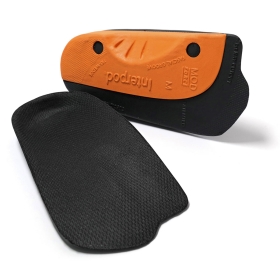
Sold: Sold per Pair
Incl. VAT Exl. VAT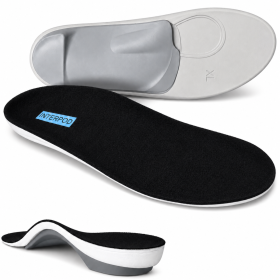
Sold: Sold per Pair
Incl. VAT Exl. VAT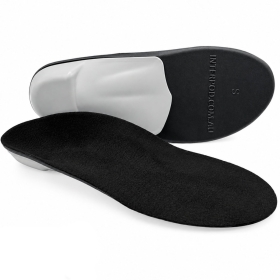
Sold: Pair
Incl. VAT Exl. VAT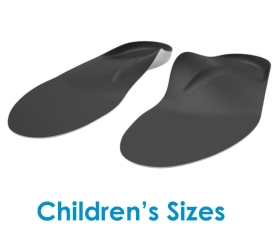
Sold: Sold per Pair
Incl. VAT Exl. VAT
Sold: Sold per Pair
Incl. VAT Exl. VAT
Sold: Each
Incl. VAT Exl. VAT