




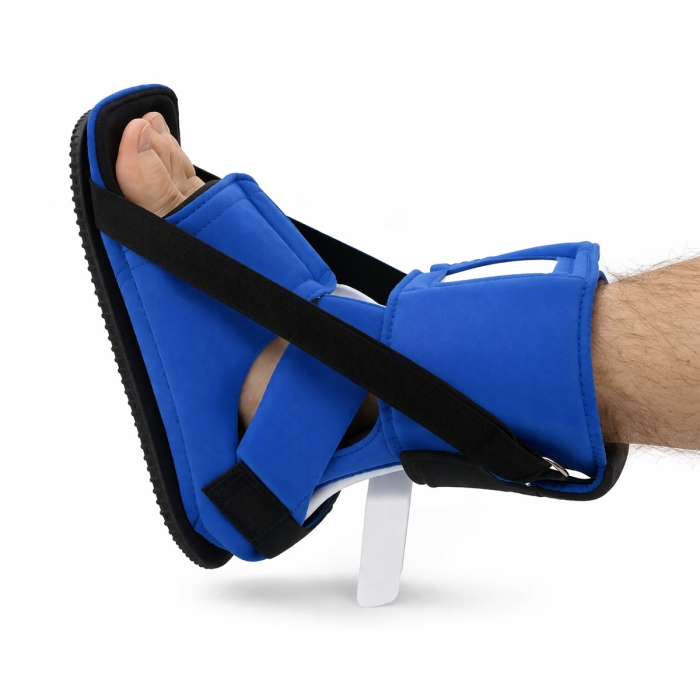
Restorative Medical Safe Boot II Heel Offloading Boot for Drop Foot
Comfortably treats plantar flexion, ankle alignment, and foot drop.
Helps prevent heel pressure ulcers during prolonged bed rest.
Maintains neutral ankle alignment.
Supports prevention of foot drop and contractures.
Contact us for availability if required item is unavailable to add to cart.
Sold: Each
Incl. VAT Exl. VAT
Product Description
Offloading Boot for Drop Doot and Contracture Management
The Safe Boot II is a clinically designed heel offloading and ankle positioning boot for patients who are immobile, on prolonged bed rest, or need support to maintain a more neutral foot position. It is used to suspend the heel away from the mattress, help reduce pressure on vulnerable tissue, and support management of plantar flexion, foot drop, and lower-limb alignment.
It is most relevant for hospitals, rehabilitation settings, nursing homes, and supervised home care where pressure relief, positioning, and contracture prevention are important. For clinicians and informed carers, it offers a practical way to combine heel protection, ankle support, and comfort in one device.
Key Selling Points
Heel pressure relief
The open-heel design helps float the heel away from the support surface, which may reduce pressure on one of the areas most at risk of pressure injury during prolonged immobility.
Supports neutral ankle alignment
Adjustable dorsiflexion assist straps help maintain the foot in a more neutral position to support foot drop management and reduce the risk of plantar flexion contracture.
Improved leg stability in bed
An integrated anti-rotation bar helps reduce inward or outward rolling of the leg while the patient is lying down.
Comfort for longer wear
Soft padding is designed to cushion the calf, ankle, and foot while reducing friction and skin pressure.
Adaptable fit
The high-temperature plastic base can be remoulded by clinicians, and the straps allow fit and positioning adjustments for individual patient needs.
Useful during supervised rehabilitation
A non-slip sole and toe-off angle support brief standing, gait training, and short ambulation when clinically appropriate.
What It Does and How It Works
The Safe Boot II works by redistributing pressure away from the heel while supporting the lower leg and foot in a more stable position. By suspending the heel, it helps protect tissue that can become damaged during extended periods in bed.
At the same time, the boot helps hold the ankle in a more neutral dorsiflexed position. This can be helpful where there is concern about foot drop, plantar flexion, or gradual tightening of soft tissues. The anti-rotation bar adds further positional control by helping keep the leg aligned while resting.
This boot is used to keep pressure off the heel, support the foot and ankle in a safer resting position, and make longer periods of immobility easier to manage.
Indications
Heel pressure ulcer risk
Used where patients are spending long periods in bed and need heel offloading to help prevent pressure-related skin breakdown.
Existing heel pressure injury management
May be used as part of a broader pressure care plan where reducing direct heel contact is important.
Foot drop prevention or management
Useful when maintaining a more neutral ankle position is a goal during recovery, rehabilitation, or reduced mobility.
Plantar flexion contracture prevention
Designed for situations where prolonged positioning may encourage the foot to tighten into plantar flexion.
Lower-limb positioning during bed rest
Supports more consistent alignment for patients who cannot independently reposition well.
Short supervised therapy sessions
The sole and toe-off angle may assist limited standing or gait training where approved by the treating professional.
Applications and Who It’s Suitable For
The Safe Boot II is suitable for healthcare professionals, carers, and informed users looking for a heel offloading boot for pressure relief and positioning support. Based on the source page, it is commonly used for:
- Patients at risk of heel pressure ulcers during prolonged bed rest
- Patients with existing heel pressure injuries who need heel suspension as part of care
- Mild to moderate contracture management of the foot or ankle
- Foot drop support and ankle alignment management
- Post-surgical or post-orthopaedic immobilisation
- Stroke, CVA, TBI, ABI, spinal cord injury, Parkinson’s disease, dementia, end-stage Alzheimer’s disease, cerebral palsy, and ALS where positioning support is needed
- Patients with rheumatoid arthritis or osteoarthritis where foot and ankle support may be helpful
- Hospital wards, rehabilitation units, nursing homes, and supervised home care
Who It May Not Be Suitable For
- Users expecting unrestricted walking or everyday mobility support rather than a positioning and offloading device
- Situations where the boot cannot be fitted, monitored, or adjusted appropriately
- Patients who require unsupervised weight-bearing activity
- Anyone using the boot without appropriate clinical guidance where skin integrity, circulation, or positioning risk needs monitoring
- Cases where straps or fit create pressure, rubbing, or circulation concerns and the device has not been rechecked
Important: the non-slip sole is intended for limited, clinically appropriate standing or short ambulation, not general walking use.
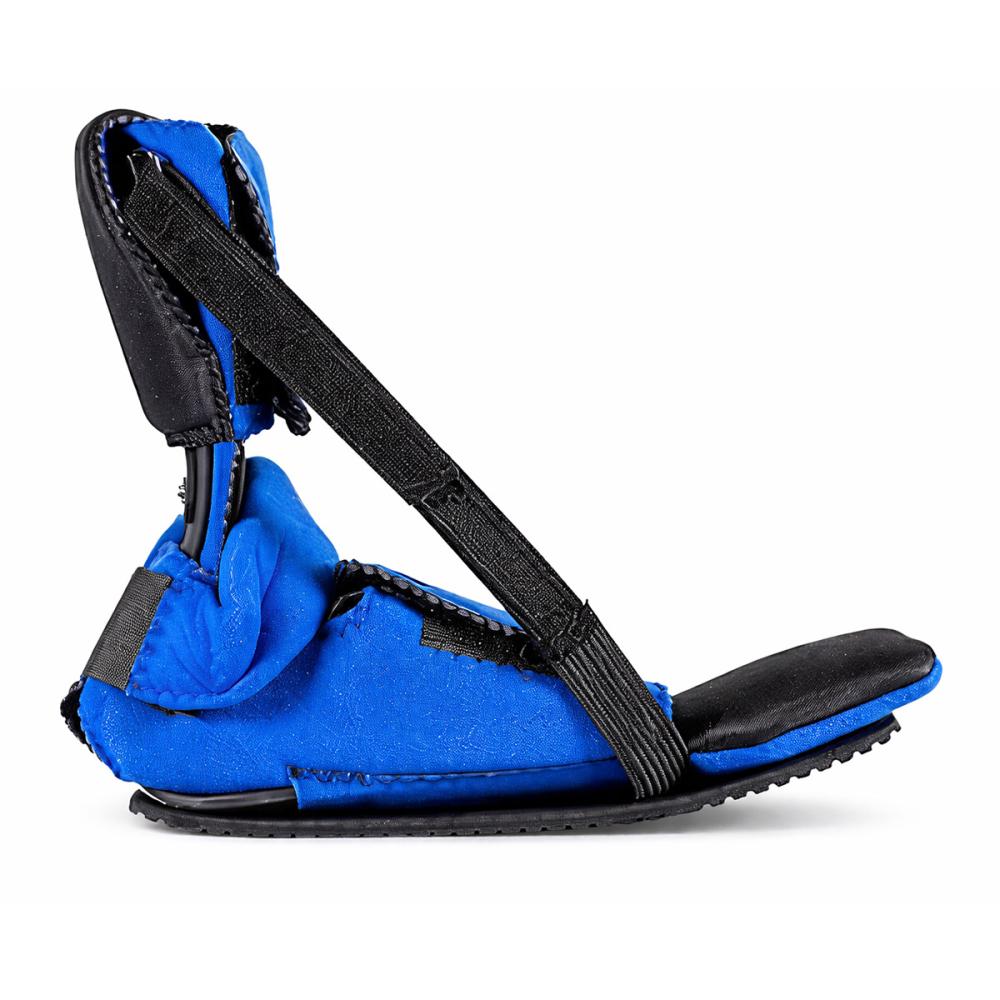 Safe Boot II heel offloading boot
Product Specifications
| Product name | RM Safe Boot II Heel Offloading Boot |
|---|---|
| Brand | Restorative Medical |
| Primary function | Heel offloading and ankle positioning support |
| Heel protection | Open heel / heel suspension design to reduce direct heel pressure |
| Ankle control | Adjustable dorsiflexion assist straps |
| Stability feature | Integrated anti-rotation bar |
| Padding | Soft internal padding to improve comfort and reduce skin pressure |
| Base | High-temperature plastic base that can be remoulded |
| Sole | Non-slip sole for limited standing and short ambulation when clinically appropriate |
| Toe plate | Removable toe plate with toe-off angle to assist gait training and short ambulation |
| Typical settings | Hospitals, rehabilitation, nursing homes, and supervised home care |
| Sold as | Each |
Size Guide
| Small | Foot length up to 8" |
|---|---|
| Medium | Foot length up to 9.5" |
| Large | Foot length up to 11" |
| Extra Large | Foot length up to 13" |
Usage Instructions
- Position the lower leg inside the boot so the heel is fully suspended and not bearing against the support surface.
- Secure the straps around the calf and foot to achieve a stable fit without overtightening.
- Adjust the dorsiflexion straps to support a neutral ankle position where clinically appropriate.
- Check that the anti-rotation bar is positioned correctly if rotational control is needed.
- Inspect the skin regularly for signs of pressure, rubbing, irritation, or compromised circulation.
- Follow clinician guidance for wear time, repositioning schedules, and any supervised standing or gait activity.
Benefits
Helps relieve heel pressure during immobility.
Supports ankle positioning to help manage foot drop risk.
May help reduce contracture risk in prolonged bed rest.
Improves limb alignment with anti-rotation control.
Designed for comfort with padded support surfaces.
Adaptable for clinical fit with adjustable straps and remouldable base.
Contraindications & Warnings
- Use under healthcare professional guidance where appropriate.
- Monitor skin integrity regularly, especially in patients with fragile skin, poor circulation, neuropathy, or high pressure injury risk.
- Do not fasten straps so tightly that circulation is restricted.
- Check fit, alignment, and heel suspension regularly during wear.
- The non-slip sole supports limited standing only when clinically appropriate and supervised.
- If the device causes pain, pressure marks, numbness, swelling, or worsening skin condition, remove and reassess promptly.
FAQs
What is the Safe Boot II used for?
The Safe Boot II is used to offload pressure from the heel and support the foot and ankle in a more neutral position. It is commonly chosen for patients on prolonged bed rest or with reduced mobility who are at risk of heel pressure ulcers, foot drop, or plantar flexion contracture.
How does a heel offloading boot work?
A heel offloading boot works by suspending the heel away from the mattress or resting surface. This helps redistribute pressure along the lower leg rather than directly onto the heel, which can be important in pressure care and tissue protection.
Who should use the Safe Boot II?
It is intended for patients who need heel protection, ankle positioning support, or contracture management during reduced mobility. Typical users include patients in hospitals, rehabilitation, nursing homes, and supervised home care.
Can it help with foot drop?
Yes. The adjustable dorsiflexion assist straps are designed to support a more neutral ankle position, which can help with foot drop management and reduce the tendency for the foot to rest in plantar flexion during immobility.
Can the patient walk in it?
The Safe Boot II has a non-slip sole and toe-off angle for limited standing, gait training, and short ambulation when clinically appropriate. It is not intended as a general walking boot or for unrestricted everyday mobility.
Is it suitable for pressure ulcer prevention?
Yes. One of its main uses is to help reduce pressure on the heel in patients who are vulnerable to pressure damage during long periods in bed or reduced movement.
Can it be used for existing heel pressure injuries?
It may be used as part of a wider care plan for existing heel pressure injuries where heel suspension and pressure reduction are required. Ongoing skin checks and clinical supervision remain important.
Is the boot adjustable?
Yes. It includes adjustable straps, a removable toe plate, an anti-rotation bar, and a remouldable base to improve fit and positioning for individual patients.
How long can it be worn?
Wear time depends on the patient’s clinical needs and monitoring plan. Many users wear it for extended periods during bed rest, but skin condition, comfort, fit, and circulation should be reviewed regularly.
When should it not be used without extra caution?
Extra caution is needed where there are skin integrity concerns, poor circulation, fragile tissue, or a risk that the device may be fitted too tightly or used without appropriate supervision. If there is uncertainty, clinical guidance should be followed.
Summary
The Safe Boot II is a heel offloading boot designed to protect the heel and support neutral ankle positioning in people with reduced mobility. It is commonly used to help lower the risk of heel pressure ulcers, support foot drop management, and reduce plantar flexion contracture risk during prolonged bed rest. It is suitable for clinical environments and supervised home care where pressure relief, positioning, and patient comfort are priorities.
Frequently bought together
Sold: Each
Incl. VAT Exl. VAT
Sold: Each
Incl. VAT Exl. VAT
Sold: Each
Incl. VAT Exl. VAT
Sold: Each
Incl. VAT Exl. VAT
Sold: Each
Incl. VAT Exl. VAT
Sold: Each
Incl. VAT Exl. VAT