




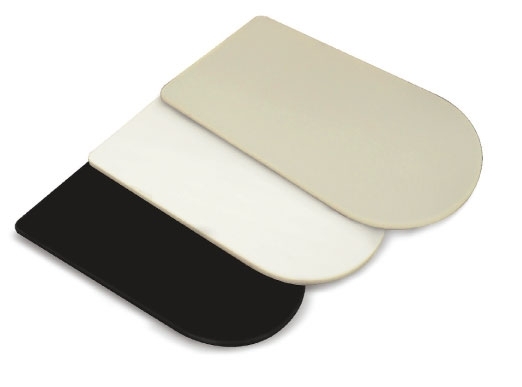
Aortha PPC Foot Orthotic Blanks
High-performance PPC orthotic blanks offering a balance of rigidity, resilience, and impact resistance.
Pre-cut blank sizing supports deep heel cups and directional control without excessive waste.
Thermoformable within standard PPC temperature ranges for predictable, repeatable results.
Supplied in multi-pair packs to improve efficiency, storage, and cost control in busy workshops.
Sold: Pack of 10 Pairs (20)
Incl. VAT Exl. VAT
Product Description
Polypropylene Orthotic Shell Blanks
Ready-to-use orthotic blanks manufactured from high-performance Aortha PPC, designed to support efficient fabrication of durable, custom foot orthoses.
Best for: Clinics and workshops producing custom foot orthoses requiring controlled flexibility, impact resistance, and repeatable forming results.
Not ideal for: Applications requiring ultra-soft or cushioning-only materials without structural control.
- Consistent PPC formulation for predictable forming behaviour
- Pre-cut blank sizing to support deep heel cups
- Supplied in convenient multi-pair packs
What is it?
Aortha PPC Foot Orthotic Blanks are pre-shaped orthotic shells produced from copolymer polypropylene (PPC), a thermoplastic widely used in orthotic fabrication. PPC is known for its balanced combination of rigidity, impact resistance, and controlled flexibility, making it suitable for foot orthoses that must tolerate repeated loading without permanent deformation.
These blanks are supplied ready to thermoform, removing the need to cut from large sheets and helping standardise workshop processes. The material is formulated to yield under pressure and torque during gait, then return consistently to its original form, reducing the risk of distortion over time.
Who is it for?
This product is intended for professional and specialist users involved in the design, manufacture, or modification of custom foot orthoses. It is particularly suited to environments where efficiency, consistency, and material reliability are important.
What is it used for?
Aortha PPC Foot Orthotic Blanks are used as the structural shell component of custom foot orthoses. Once thermoformed, they provide a stable base that can be further finished, posted, or topped according to individual prescription requirements.
Typical applications
- Custom foot orthoses for everyday footwear
- Orthotic shells requiring directional rigidity
- Devices incorporating deep heel cups
- Clinical, sports, or occupational orthotic fabrication
- Educational and training settings for orthotic manufacture
Characteristics
- Lightweight with good structural rigidity
- High resistance to impact, cracking, and fatigue
- Thermoformable within standard PPC temperature ranges
- Returns to shape after loading without permanent deformation
- Available in multiple colours for identification or workflow preference
Typical users
- Orthotists and prosthetists
- Orthotic technicians and fabrication laboratories
- NHS and hospital in-house workshops
- Private podiatry and sports clinics
- Universities and training institutions
- Bespoke footwear makers and specialist technicians
How to work with it
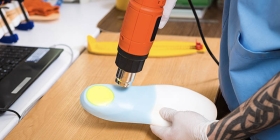
The blanks are designed for standard thermoforming workflows. Once heated to the appropriate temperature range, the material becomes pliable and can be vacuum or pressure formed over a positive model or foot impression. After cooling, the PPC regains its structural properties and can be trimmed and finished as required.
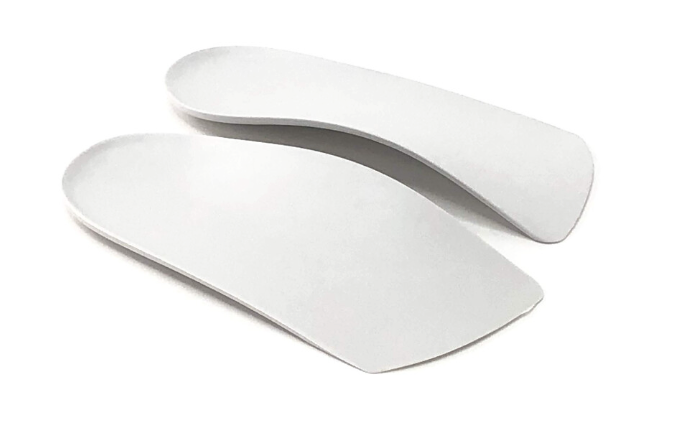
Expected use timeline
First use: Once thermoformed and finished, the orthotic shell is ready for integration into a complete device. Initial fitting may highlight areas requiring minor adjustment or finishing.
Ongoing use: Over weeks of regular wear, the PPC shell is designed to tolerate repeated loading while maintaining its overall shape. As with all orthotic devices, periodic review is recommended to assess wear and suitability for continued use.
Common problems and how the product helps
| Common problem | How the product helps |
|---|---|
| Orthotic shells cracking under repeated load | PPC formulation offers high resistance to cracking and material fatigue. |
| Distortion after prolonged use | Material yields under pressure but consistently returns to its formed shape. |
| Time lost cutting from large sheets | Pre-cut blanks streamline preparation and reduce fabrication time. |
| Excess material waste | Blank sizing reduces offcuts and unnecessary disposal. |
Key benefits
- Efficient, ready-to-use format for busy workshops
- Balanced rigidity and flexibility for functional orthoses
- Robust performance under impact and cyclic loading
- Consistent thermoforming behaviour across batches
- Space-saving alternative to storing large PPC sheets
- Cost-effective option for small or high-turnover production
Common mistakes to avoid
- Overheating beyond recommended forming temperatures, which may affect material properties
- Assuming one shell design suits all clinical requirements without appropriate modification
- Skipping trial fitting and finishing steps after forming
- Using PPC where a significantly softer or more flexible material is required
Usage advice: How to use
Below is our recommended method of use with a standard Algeos vacuum press.
-
- Set oven temperature to 185°C.
- Remove protective film from both sides of the pre-cut Polypropylene blank.
- Place on a flat surface in the oven. If possible allow 2cm of the polypropylene to hang over the edge of the heating shelf.
- Heat at 185°C for 6 minutes or until the overhanging polypropylene bends under it’s own weight to 45°.
- Transfer to the rectified plaster of paris cast on the platen of the Algeos vacuum press.
- Evacuate the air from the vacuum press as quickly as possible to avoid trapped air on the surface of the moulding
- Allow the vacuum formed Polypropylene to cool naturally
- Trim and finish device as desired.
Technical specifications
| Material | Copolymer Polypropylene (PPC) |
|---|---|
| Thermoforming temperature | Typically 180–200°C |
| Colours | Varies by option (multiple colours available) |
| Blank sizing | Pre-cut orthotic blank sizing; varies by option |
| Rigidity profile | Directional rigidity suitable for foot control |
| Left / right | Supplied as matched pairs |
| Pack contents | 10 pairs of orthotic blanks |
| Care and storage | Store flat in a cool, dry environment away from direct heat sources |
Frequently asked questions
Can these blanks be used for sports orthoses?
They are commonly used in sports and activity-related orthoses where impact resistance and resilience are important.
Are the blanks suitable for deep heel cups?
Yes, the blank sizing and material characteristics support the formation of deeper heel cups when required.
How durable is PPC compared to other thermoplastics?
PPC is known for its resistance to cracking, impact, and general fatigue under repeated loading.
Do the blanks require special equipment?
Standard orthotic thermoforming equipment is suitable. No specialist machinery is required beyond typical workshop tools.
Will the material permanently deform over time?
The material is designed to yield under load and then return to its original shape, though periodic review of finished devices is recommended.
Are these suitable for teaching environments?
Yes, they are often used in training and educational settings due to their predictable forming behaviour.
Complementary and pairing suggestions
- Orthotic top cover materials for cushioning and comfort
- Posting materials for rearfoot or forefoot control
- Adhesives and finishing tools for orthotic fabrication
- Grinding and trimming consumables
Frequently bought together
Sold: Pair
Incl. VAT Exl. VAT
Sold: Pair
Incl. VAT Exl. VAT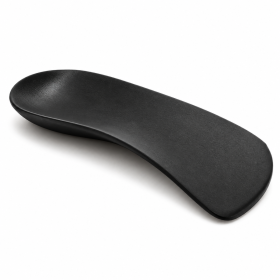
Sold: Pair
Incl. VAT Exl. VAT
Sold: Pack of 10 Pairs (20)
Incl. VAT Exl. VAT